October 2026 | GeoWild Designs – Wildlife, Nature & Conservation
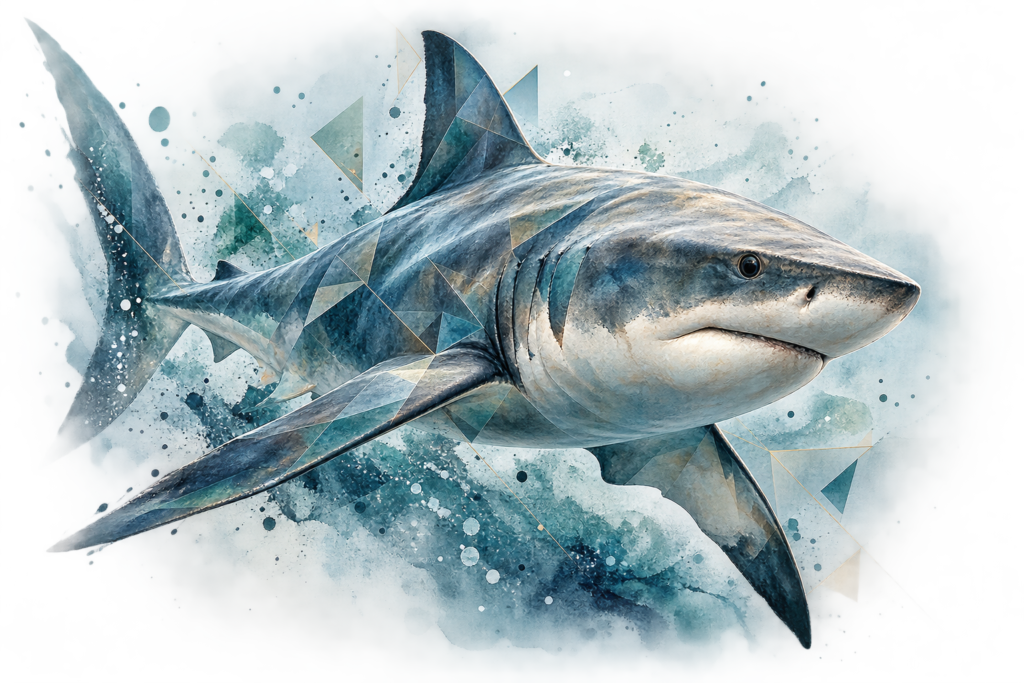
A remarkable visitor has captured hearts around the world after a shark trapped in South Korea has captured worldwide attention after becoming stranded in a narrow waterway in Busan.But behind this unusual wildlife story lies a much bigger question: could rising ocean temperatures be changing where sharks travel, hunt and live?
The shark, affectionately nicknamed Bukangi, has attracted enormous attention. And while efforts to return her safely to the ocean continue, scientists are examining what her unexpected appearance might tell us about changing marine environments.
Meet Bukangi – The Shark Who Became a Celebrity
On 18 September 2026, a female dusky shark was spotted swimming in an artificial waterway at Busan’s North Port in South Korea.
Measuring approximately three metres long, she quickly became an unexpected local celebrity.
Nicknamed Bukangi after the port where she appeared, the shark attracted extraordinary public interest. By late October, more than 1.6 million people had visited the waterfront area, hoping to catch a glimpse of her.
But behind the excitement, there were growing concerns for her welfare.
Sharks are powerful ocean predators, adapted to travelling through vast stretches of open water. A confined artificial waterway is far from an ideal environment for such an animal.
As the weeks passed, observers became increasingly concerned that Bukangi was struggling to feed and might be affected by falling water temperatures.
The Difficult Rescue
Returning a large shark to the sea is not as simple as guiding a fish out of a pond.
Previous rescue attempts involving water jets and nets had failed, with Bukangi repeatedly avoiding efforts to move her.
On 21 October, rescuers used floating platforms and carefully positioned nets to guide her towards the sea.
For a short time, the operation appeared successful.
However, Bukangi surprised everyone by swimming beneath a barrier and returning to the canal just hours later.
By 22 October, authorities were considering further measures to help her reach the open ocean safely.
Her determination to remain in the waterway raised another fascinating question: why had she entered such an unusual environment in the first place?
Could Rising Ocean Temperatures Be Responsible?
One theory receiving considerable attention is that warming seas are affecting the movements of sharks and the fish they hunt.
As ocean temperatures change, marine species may move into new areas in search of suitable conditions.
Some fish populations shift towards cooler waters. Predators that depend on those fish may follow.
Sharks are particularly interesting because many species travel enormous distances, responding to changes in temperature, food availability, ocean currents and seasonal conditions.
Scientists have recorded a rise in large-shark sightings around parts of South Korea.
During the first half of 2026, South Korea’s National Institute of Fisheries Science recorded 46 large-shark sightings along the country’s east coast, compared with 12 during the same period in 2025.
Although this does not prove that climate change caused Bukangi’s unusual journey, it raises important questions about how changing marine conditions could be influencing shark distribution.
Why Water Temperature Matters to Sharks
Water temperature plays an important role in marine ecosystems.
Different shark species have different environmental preferences, with factors such as temperature, oxygen availability and prey distribution influencing where they can thrive.
Dusky sharks inhabit tropical and temperate waters and are capable of travelling considerable distances.
When suitable conditions shift, their movements may change too.
For example, warmer waters can affect where smaller fish gather. This may encourage larger predators to explore areas where they were previously less common.
But temperature isn’t the only possible explanation.
Ocean currents, tides, food availability and even disturbances from vessels may affect a shark’s movements.
In Bukangi’s case, researchers have suggested that noise and activity in the busy port could have influenced her behaviour.
Her exact reasons for entering and remaining in the canal are still unknown.
Are Sharks Appearing in New Places?
Changes in shark sightings are not necessarily evidence that sharks are deliberately moving towards people.
Often, sharks are simply following the environmental conditions and food sources they need to survive.
However, changes in their distribution can have wider consequences.
Sharks play important roles in marine food webs. As predators, they influence prey populations and interactions between species.
When their movements change, other parts of the ecosystem may also be affected.
Understanding these changes helps researchers assess the health of marine environments and identify emerging conservation challenges.
Why Dusky Sharks Need Protection
Despite their impressive size and powerful appearance, dusky sharks face serious threats.
The species is classified as Endangered on the IUCN Red List.
Like many large sharks, dusky sharks grow relatively slowly and reproduce at a low rate. This makes their populations particularly vulnerable to overfishing and accidental capture in fishing gear.
Their survival depends not only on protecting individual animals but also on maintaining healthy oceans.
Bukangi’s story has brought a species that many people may never have heard of into the international spotlight.
Rather than being viewed simply as a dangerous predator, she has become an animal that millions of people hope will return safely to the wild.
A Reminder That Our Oceans Are Changing
Whether Bukangi entered Busan’s harbour because of changing temperatures, food availability, local disturbances or a combination of factors remains uncertain.
But her extraordinary story highlights how much there is still to learn about sharks and their movements.
It also reminds us that environmental changes can affect wildlife in unexpected ways.
An animal travelling through unfamiliar waters may seem like an isolated curiosity. Yet such encounters can encourage scientists to investigate larger changes taking place beneath the ocean’s surface.
For Bukangi, the hope is simple: that she will find her way safely back into the open sea.
For the rest of us, her story is an opportunity to look beyond the frightening reputation sharks sometimes receive and appreciate these remarkable animals for what they really are — essential, vulnerable and fascinating inhabitants of our oceans.
At GeoWild Designs, we celebrate the beauty and diversity of wildlife, from the animals living in our gardens to the extraordinary creatures inhabiting the world’s oceans. Through art and wildlife stories, we hope to inspire greater appreciation for the natural world.