
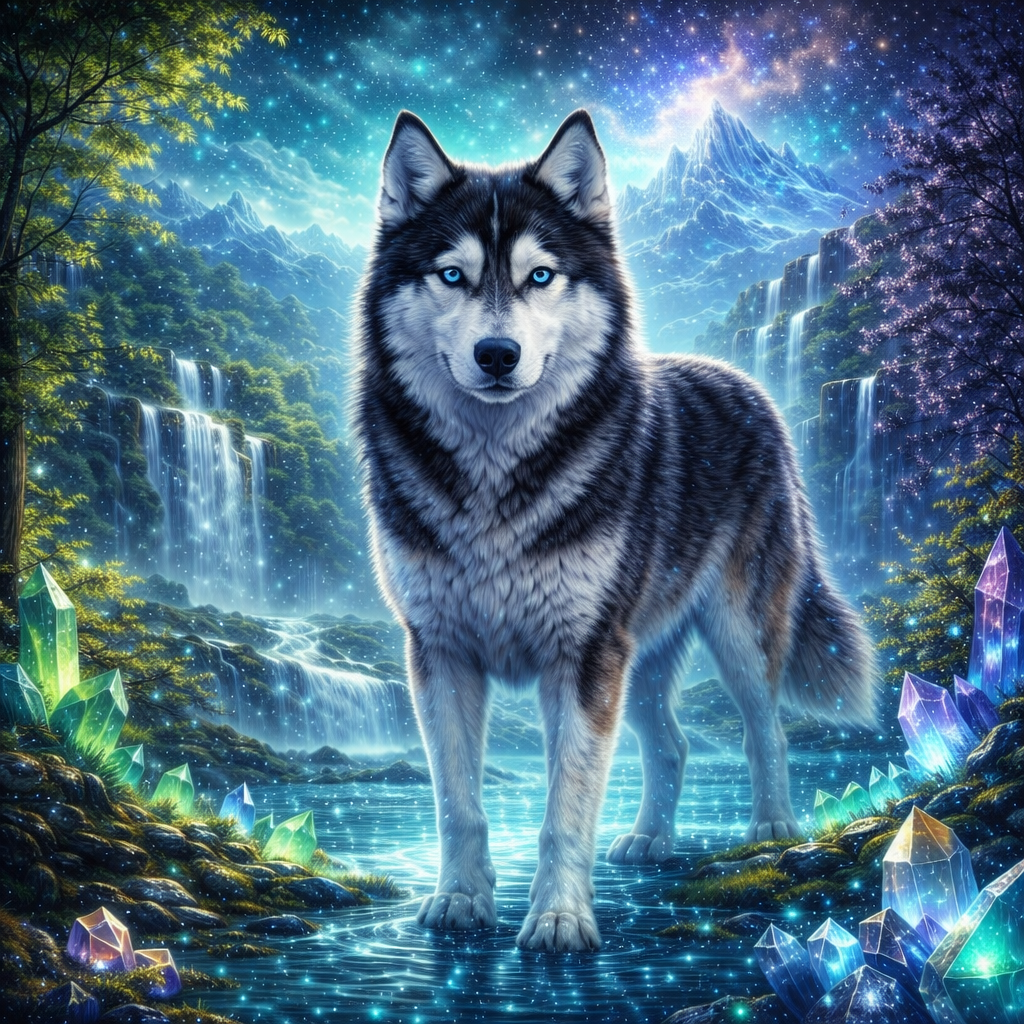
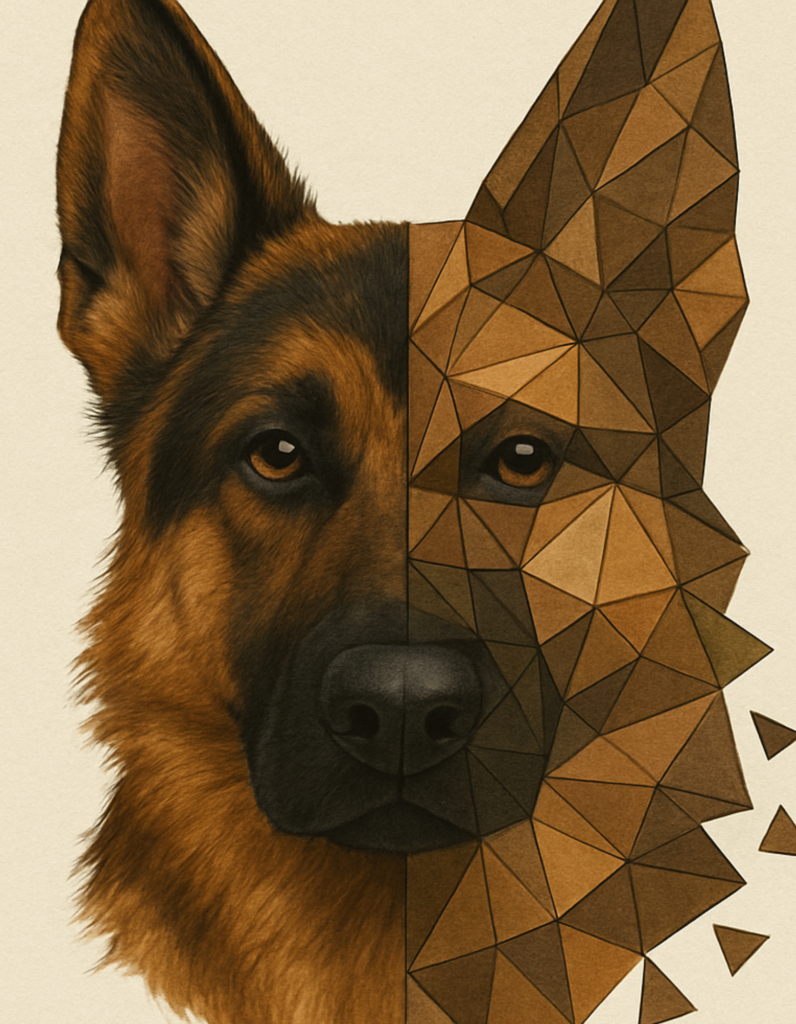
How much wolf is still inside your dog? If you’ve ever watched your dog suddenly howl at a passing siren, spin around three times before settling down or proudly carry home a stick far larger than itself, you may have wondered exactly that.
Is there still a little bit of wolf inside every dog?
The answer is yes—but perhaps not in the way many people think.
Modern dogs aren’t simply tame wolves, and they didn’t evolve directly from the grey wolves we see today. Instead, both species share an ancient common ancestor that lived thousands of years ago. Over many generations, one group gradually adapted to living alongside humans, eventually becoming the domestic dogs we know and love.
Although thousands of years of domestication have changed their appearance, behaviour and personalities, many ancient instincts have survived. Every wag of the tail, every curious sniff and every playful chase can tell us something about our dogs’ remarkable wild heritage.
⸻
From Hunter to Best Friend
Scientists believe the partnership between humans and early dogs began somewhere between 15,000 and 30,000 years ago, although the exact timing is still debated.
Rather than humans deliberately capturing wolves, many researchers believe the relationship developed naturally. Some of the friendlier wolves were attracted to human camps, feeding on discarded food. Those that were less fearful of people had a better chance of surviving, while humans benefited from having extra eyes, ears and noses around their camps.
Over countless generations, these animals gradually became less like wolves and more like the dogs we know today.
It became one of the most successful partnerships in the history of both species.
⸻
Why Does My Dog Circle Before Lying Down?
Almost every dog does it.
Before settling down for a nap, many dogs walk in small circles, scratch at the ground or rearrange their bedding.
It may seem unnecessary on a comfortable sofa or luxury dog bed, but their wild ancestors had a very good reason.
Wolves would flatten grass, leaves or snow to create a comfortable sleeping place while also checking for hidden dangers such as snakes, insects or sharp objects.
Your dog no longer needs to prepare a forest floor for the night—but the instinct remains.
⸻
Why Do Dogs Howl?
Few sounds connect our pets with their wild ancestors more than a howl.
For wolves, howling is a sophisticated form of communication. It helps pack members locate one another across vast distances, defend territory and reunite after becoming separated.
Many domestic dogs still respond to sirens, musical instruments or even another dog howling nearby.
Although your neighbour might not appreciate an impromptu canine concert, your dog is simply responding to sounds that resemble the long-distance calls its ancestors once used.
⸻
Why Do Dogs Bury Food?
Have you ever watched your dog carefully hide a favourite chew toy under a blanket?
Or bury a bone in the garden, only to forget where it left it?
This behaviour dates back to life in the wild.
Wolves don’t always know when their next successful hunt will be, so hiding surplus food protects it from scavengers and provides a meal for later.
Even though most pet dogs know breakfast and dinner arrive like clockwork, the ancient instinct to store valuable food still survives.
⸻
Why Are Dogs So Good at Reading Us?
This is one area where dogs truly became something unique.
Unlike wolves, domestic dogs have evolved an extraordinary ability to understand humans.
Many dogs can recognise facial expressions, respond to pointing gestures and even detect changes in our tone of voice.
Studies have also shown that when dogs and their owners make eye contact, both experience a rise in oxytocin—often called the “bonding hormone.”
It’s the same hormone involved in strengthening the connection between parents and their children.
This remarkable relationship is one of the reasons dogs became humanity’s closest animal companion.
⸻
Why Do Dogs Love to Chase?
Whether it’s a tennis ball, a squirrel or a blowing leaf, many dogs simply love to chase moving objects.
This instinct comes from their hunting heritage.
For wolves, noticing movement quickly could mean the difference between catching prey or going hungry.
Selective breeding has strengthened or reduced this instinct in different breeds. Border Collies, for example, were bred to control livestock using stalking behaviour, while retrievers were developed to bring game back gently after a hunt.
Although these jobs are very different today, both began with instincts inherited from wild ancestors.
⸻
Why Do Dogs Sniff Everything?
If dogs had a superpower, it would almost certainly be their sense of smell.
A dog’s nose contains hundreds of millions of scent receptors—far more than a human’s.
For wolves, scent was essential for tracking prey, identifying family members and understanding what had happened in an area long after another animal had passed through.
When your dog spends several minutes investigating a lamp post or hedge, it’s gathering an astonishing amount of information that we simply cannot detect.
For a dog, every walk is like reading the morning newspaper.
⸻
Wolves and Dogs: Similar, Yet Very Different
Although dogs have inherited many wolf-like instincts, they are no longer wolves.
Thousands of years living alongside humans have transformed them into a species perfectly adapted to our lives.
Dogs are generally more social with people, better at understanding human communication and far less wary of strangers than their wild relatives.
Wolves remain highly intelligent, cooperative predators that play a vital role in healthy ecosystems.
Dogs have become something equally remarkable—a species that has evolved alongside us, sharing our homes, our adventures and, for many of us, our families.
⸻
Appreciating the Wild Within
The next time your dog curls into a tight circle before falling asleep, buries a favourite toy or suddenly howls at an ambulance in the distance, remember that you’re witnessing behaviours shaped over thousands of years.
Those little moments offer a fascinating glimpse into the shared history of wolves and dogs—a story of survival, adaptation and one of the greatest partnerships the natural world has ever seen.
Understanding these ancient instincts doesn’t just help us appreciate wolves more.
It helps us understand our best friends a little better too.
If you enjoyed this article, you may also like: